The Ego That Blinds and the Saints We Miss
Read this not once, but two or three times—slowly, silently, and sincerely.
It is not just a commentary on society. It is a mirror—meant for deep introspection.
Because if you read with your mind, you’ll nod.
But if you read with your heart, you may awaken.
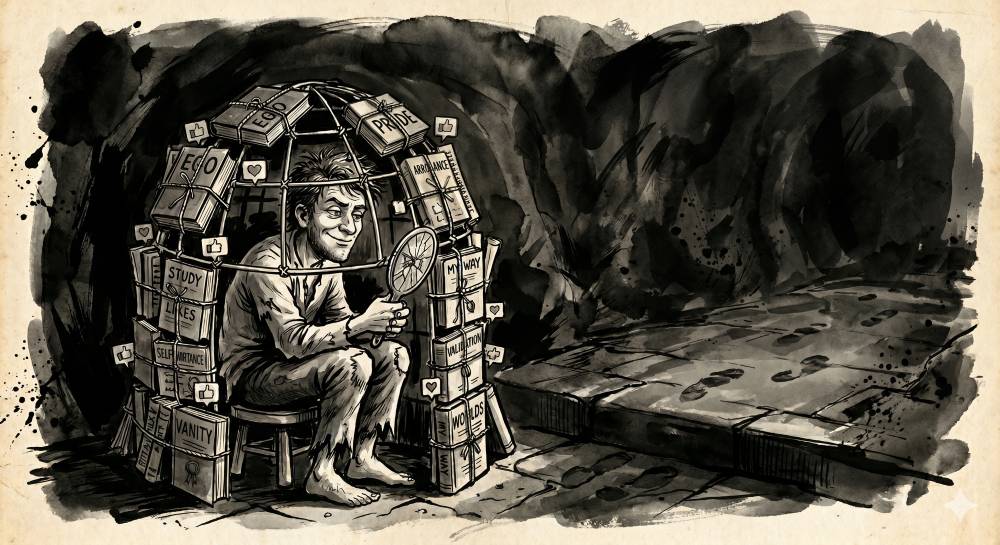
The Subtle Ego That Blinds Us All
Walk through the world, and you will rarely find a person who calls oneself a fool.
Even those who say “I’m nothing” often carry an unspoken belief:
“I’m smarter than most.”
This is the great disease of the age—an unseen ego, wrapped in politeness, coated in culture, but resistant to truth. Most people believe:
- They are wiser than others.
- Their judgment is superior.
- Others are either confused or naive.
And this illusion leads to the rejection of genuine wisdom when it comes. Even if a saint or sage offers the truth out of love, people resist. They consider themselves too clever to be guided.
A Psychological Trap with Spiritual Consequences
This behaviour is not just psychology—it is a spiritual loss.
Because it creates a world where:
- The truly wise go unheard.
- The truly compassionate go unsupported.
- And the truly divine among us are worshipped only after they are gone.
“A prophet is not without honour, except in his own town.”
— Jesus, New Testament – Mark 6:4
When great souls walk this Earth—those with lived truth, not borrowed knowledge—most around them fail to recognise them.
They sing their praises.
They take photos with them.
They quote them at events.
But they do not follow their teachings.
They do not apply their advice.
They do not surrender their ego enough to truly learn.
And when that master, that guide, that awakened being departs, they gather to hold remembrance days, sing hymns in his name, print his quotes on calendars, and continue living the same way.
“Jāne ke bād keemat jānī jātī hai.”
“The value is known only after one is gone.” — Indian proverb
From Saints to Silence: A Pattern Across All Faiths
- When Ramana Maharshi sat silently on Arunachala, how many truly surrendered their egos to him while he lived?
- When Guru Nanak spoke of divine oneness beyond caste, how many heard him as more than a poet?
- When Christ healed the sick and forgave the sinners, his own people cried, “Crucify him.”
- When Rumi’s master Shams Tabriz spoke divine truth, he was driven away by jealous minds.
And yet, centuries later, their words are worshipped.
Their names are sung.
But their living essence—humility, surrender, love—is still ignored.
Modern Examples, Same Story
- A father gives guidance to his son, but the son, now educated, finds the father old-fashioned.
- A guru lovingly instructs his disciple, but the disciple, proud of his own knowledge, walks his own way.
- Teachers in schools, professors in colleges, senior colleagues in institutions—all are slowly being replaced by Google searches and YouTube egos.
But truth doesn’t reside in information. It lives in embodied wisdom, which only a realised soul can offer.
False Wisdom vs. True Guidance
Not everyone who speaks is wise. Many speak confidently, but mislead.
Their advice causes harm, confusion, or loss.
And yet, due to ego, people prefer these voices—because they flatter rather than challenge.
True wisdom often challenges you.
It shakes your beliefs.
It demands surrender, not applause.
“Be doers of the word, not hearers only, deceiving yourselves.” – Bible, James 1:22
Spiritual knowledge unapplied is like a lamp left unlit — beautiful, but useless.
🔸 To be continued in Part Two: A deeper journey into the essence of true devotion, the path of the selfless seeker, and how serving others is not a detour from moksha — but its most direct path.