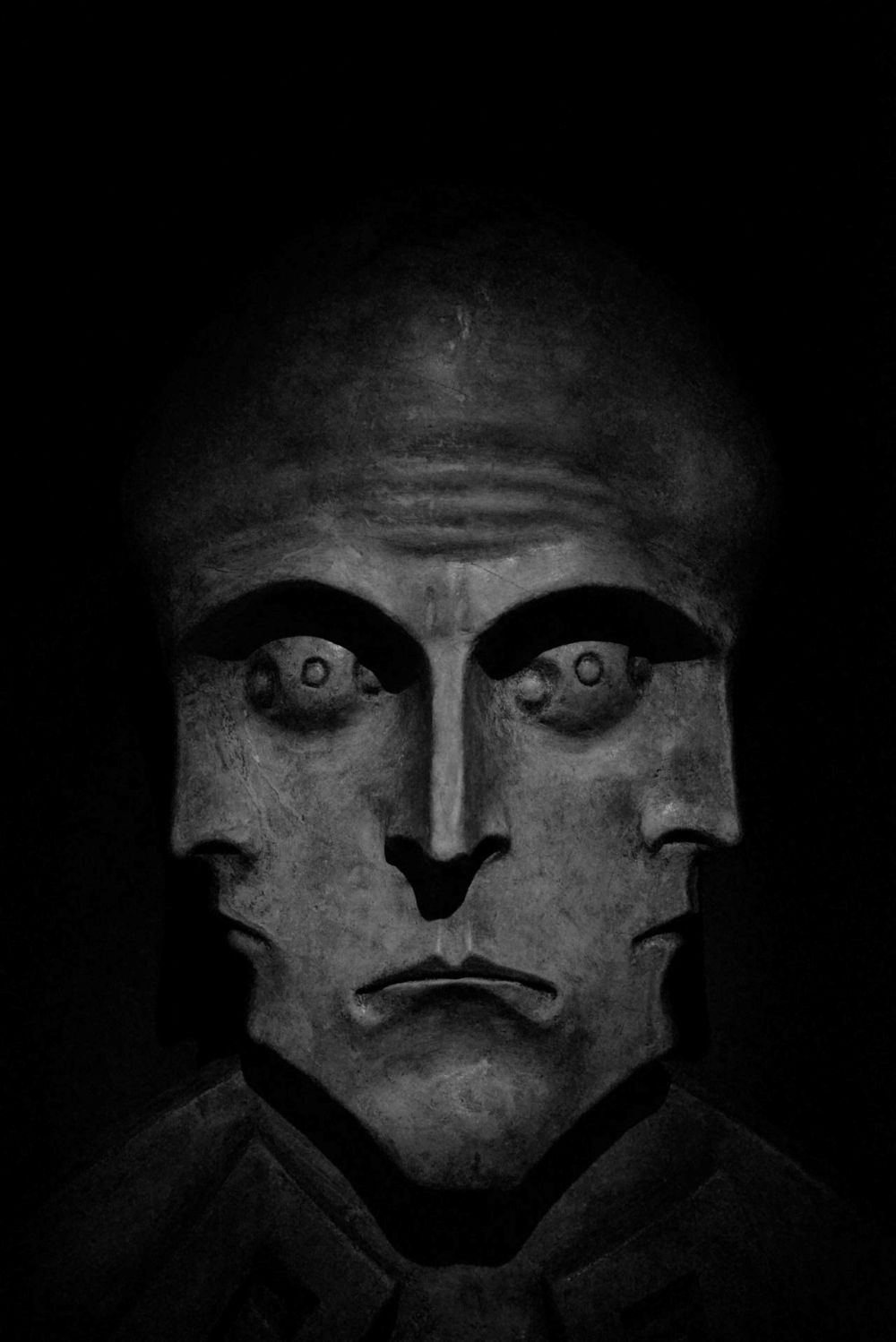
Duality is the inherent feature of this manifested world, while non-duality is the essence of the subtle, uncreated, eternal worlds.
Complementarity, contrast, and contradiction are all aspects of duality in this world. As examples, day and night, good and bad, right and wrong, etc., are all contrasting, contradictory and complementary. They represent the extremes of duality, and everything in between represents plurality.
“Dvaita exists in the world of perception; Advaita is realised in the realm of truth.”
— Upanishadic essence
This duality is beautifully expressed in the Isha Upanishad (verse 11):
“He who sees all beings in the Self and the Self in all beings, never turns away from it.”
The statement captures the core of non-duality: Oneness beyond the illusion of multiplicity. What we perceive as opposites are but the dance of Maya (illusion) on the canvas of one unchanging Truth.
Modern quantum physics also hints at this paradoxical unity — wave-particle duality, complementarity, and quantum entanglement reveal that opposites may not be contradictory but rather coexisting expressions of a deeper, non-dual reality.
Difference between Sentience and Consciousness
Anything that manifests properties of life can be called sentient. A cell of a multicellular organism, for example, is considered sentient as it exhibits all the properties of life when placed in a nutrient medium, such as the exchange of materials, digestion, metabolism, reproduction, and growth. It would continue to manifest these properties as long as sufficient nutrients and oxygen are available in the medium or environment. However, once the nutrients are depleted, it can no longer manifest its properties and would become insentient. Moreover, it would not be able to move to a different place where nutrients are available, nor would it exhibit aversion responses to stressful stimuli or move away from the source of stress or an unfavourable stimulus. This is because it lacks consciousness, despite being sentient.
To function as an organism more than sentience, consciousness is required — what is popularly referred to as jeev, soul, or spirit. So, a bacterium, an amoeba, and other unicellular organisms have consciousness over and above sentience, which enables them to move in search of food, respond to unfavourable or damaging stimuli, etc. Apparently, a soul or spirit can function only within a medium of sentience.
“Sentience is biological. Consciousness is transcendental.”
The distinction mirrors the Vedantic understanding of Jada (the insentient, inert) and Chaitanya (the conscious, aware principle). While Prakriti (nature) is the machinery, it is Purusha (consciousness) that enables function and purpose.
Contemporary neuroscience has begun exploring this frontier. As neuroscientist Christof Koch puts it:
“All living things have sentience, but only some have consciousness — that capacity to feel, to know that we feel, and to reflect on it.”
– Christof Koch
Unfolding the Source: From Nature to Soul
Now the question is, wherefrom do the sentient environment and the conscious soul come from?
Obviously, sentience has its origin in Nature (Prakrithi) — an aspect of creative energy from which the entire worldly nature and Maya manifest, along with the three Gunas/qualities:
- Satvik – purity, virtue, harmony
- Rajasik – action, passion, desire
- Tamasik – inertia, ignorance, obscuration
Prakriti manifests as organic matter, air, water, space, and fire — forming the sentient body.
On the other hand, consciousness/life force/soul/spirit originates from the Purusha principle — the higher, witnessing aspect of the same creative energy. Together, Prakriti and Purusha constitute the dual basis of all living beings.
“Purusha is the conscious principle, Prakriti is the field. Together they manifest the dance of life.”
– Bhagavad Gita 13.19
The origin of Nature/Prakrithi is from the Sumangala power of Avyākrith (the mental plane of Akshar Brahm).
The origin of Purusha/Ādi Nārāyan/Hiranyagarbha/Aum is from the Sablik plane — the conscious plane of Akshar Brahm — a reflective form of the Chidānand Lahiri Principle, the wave of bliss-consciousness.
Akshar Brahm, the Lord of Akshar Brahmand as per Hindu metaphysics, corresponds to the Lord of the Upper Heaven for Biblical traditions or Noor Jalal of Jabroot/Sadar-tul-muntaha in Quranic cosmology.
This framework aligns with Samkhya philosophy, which envisions Purusha as the eternal seer and Prakriti as the seen — inert, yet reactive, until enlivened by consciousness.
Human Birth and the Ladder of Conscious Evolution
Although the consciousness in both amoebae and humans is alike, one functions within a minimal, sentient machinery, while the other operates through a highly organised, evolved instrument. Therein lies the evolution of consciousness — not in its core essence, but in its range of manifestation.
The human body — representing the most sophisticated sentient interface — offers a platform for accessing the subconscious, conscious, and supraconscious planes.
Apparently, the sentient hierarchy — from unicellular organisms to plants, to animals, and finally to humans — represents ascending stages of sensory and cognitive complexity that allow consciousness to evolve spiritually.
The human mind and intellect are gifted with self-reflective awareness, enabling one to ask:
Who am I? Where have I come from? What is the purpose of life? What happens after death?
“The evolution of form is for the involution of spirit.” – Sri Aurobindo
The Gita reminds us:
“Among thousands of humans, only one strives for perfection. Of those who strive, only a rare one truly knows Me.”
– Gita 7.3
Yet, sadly, unaware of these deeper realities, consciousness in human life often squanders its opportunity, chasing worldly pursuits beyond the bare necessities. Though it has immense potential, it remains confined to a limited expression when trapped in lower desires and distractions.
“This rare human birth is your chance to meet the Divine – don’t waste it in worldly sleep.”
– Saint Kabir.
Prakriti and Purusha: The Twin Forces of Creation
These are the two principal and fundamental energy fields that manifest at the very beginning of creation. In the primordial state, a highly concentrated and condensed point of energy — the seed potential of all gross matter — emerges from its metaphysical source: an eternal, non-material dimension within the mental realm (Avyakrit) of Akshar Brahm.
From this dimension arises the Kāraṇa Prakriti (causal nature) — unmanifest and subtle, yet containing the blueprint of the cosmos: universes, galaxies, planetary systems, and all forms of life.
Only when activated by the Purusha principle does this causal Prakriti give rise to Jada Prakriti — gross, manifest material nature.
The Sumangala principle, a kinetic, feminine power, is the active agent of this movement — equivalent to Adi Shakti, Nature, or the Primordial Feminine. Physics identifies this as kinetic energy — the capacity to act and create.
Purusha, in contrast, arises from Chidānanda Lahiri, the wave of bliss-consciousness — a masculine, intelligent, directive force. Without it, Prakriti is like an unbridled horse, running wild with no guidance or goal.
This Purusha–Prakriti interplay is responsible for all cosmic, organic, and psychological processes. Prakriti is the material cause (upādāna kāraṇa), and Purusha is the instrumental cause (nimitta kāraṇa), guiding evolution, balance, and purpose.
The Bhagavad Gita (13.20) confirms:
“Prakriti is said to be the cause of all material activities and effects; Purusha is said to be the cause of experiencing pleasure and pain.”
This cosmic polarity is also seen at the cellular level.
The nucleus, carrying the regulatory genetic code, acts as Purusha, while the cytoplasm, rich in biochemical activity, mirrors Prakriti. The nucleus guides; the cytoplasm manifests. Together, life unfolds.
In quantum biology, these roles are mirrored in the interaction of information fields (Purusha) and material particles (Prakriti). As biologist Rupert Sheldrake states:
“Forms and patterns are shaped not merely by physical forces, but by formative fields carrying information — a kind of consciousness that works through matter.”
Cross-cultural parallels also reflect this:
- Yin and Yang in Taoism: Yin (Prakriti) and Yang (Purusha) — balance sustains all.
- “Kun fa-yakoon” in Sufism: “Be, and it is” — command (Purusha) manifests creation (Prakriti).
Thus, from cosmic evolution to cellular life, the sacred interplay of spirit and substance — Purusha and Prakriti — orchestrates the sacred symphony of existence.
Prakriti acts. Purusha witnesses, guides, and awakens. Together, they manifest the Dance of Creation.