Nothing Wrong with Ritualism
In recent times, many voices have been raised in favour of abolishing ritualism in Hinduism. This stirs up a fundamental question: is this rejection born of true spiritual insight, or merely a reformation trend colored by modern notions of progress and political correctness? The very word ritualism often carries a dismissive tone, as though worship in Hindu tradition were nothing but empty mechanical acts. But this is far from the truth.
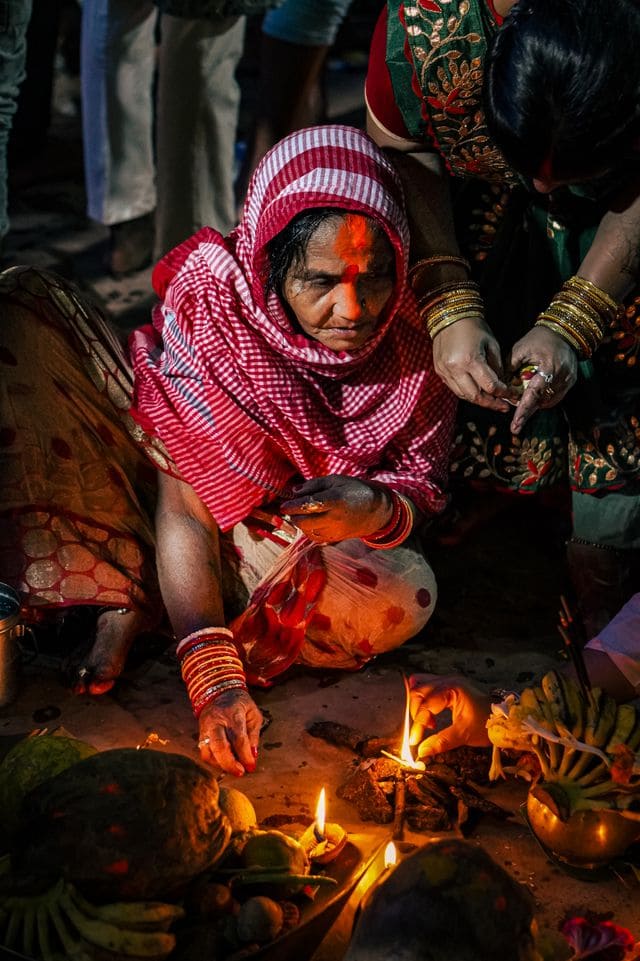
A sincere Hindu does not perform rites as hollow gestures. The act of abhisheka—bathing the divine—symbolises purification and offering of the self. The act of offering prasad is not mere food distribution but the loving gesture of feeding the deity, partaking later as sanctified grace. These actions rest on bhavana—the inner feeling of reverence. Even if the feeling is faint in the beginning, it deepens with intent and repetition.
The images of our devatas (deities) are not figments of imagination. They were revealed to ancient rishis in deep meditation and sanctified by countless generations of worship. To stand before them in love and devotion, to worship through Agamic rites and the guidance of seers and gurus, is to make them living realities. Through consecration (Prāṇa Pratiṣṭhāpanā), divine power is invoked into the image, making the idol a radiant vessel of the sacred.
Why, then, should we tamper with it? Why dismantle a successful spiritual formula passed down by our ancestors, depriving ourselves of the richness of our heritage?
“There are more things in heaven and earth, Horatio,
Than are dreamt of in your philosophy.”
– Hamlet
Rituals are such dimensions—beyond the grasp of dry reasoning, yet profoundly transformative in the soul’s journey.
The Three Stages of Worship
Hinduism itself does not stop at rituals. Ritual is a beginning, not the culmination. Through the lens of the Nijanand philosophy, there are three progressive stages of worship:
- Shariat (Ritualistic / External Worship) – the first toddler steps of religiosity.
- Haqiqat (Knowledge / Gnostic Realisation) – delving into the knowledge of the Absolute.
- Ma‘rifat (Singular Love-filled Contemplation) – unflinching love and devotion to the Supreme.
This is not unlike education. A child must pass through primary, secondary, and higher levels before reaching the university. Some rare geniuses, owing to past spiritual merit, leap directly to advanced stages. But for most seekers, ritual is the natural and necessary initiation into spirituality.
“As men approach Me, so do I receive them;
all paths lead to Me, O’ Arjuna.”
– Bhagavad Gita 4.11
“He is one, without a second.”
– Chandogya Upanishad 6.2.1
The Necessity of the First Steps
No one can jump to the heights of contemplation without first grounding themselves in devotion expressed through form. The journey often begins with worship of a family or community deity, or one’s chosen ishta devata. This gradual progression from saakar (form) to nirakar (formless) is a sacred pathway.
Karma also plays its part. The spiritual quotient carried from past births determines how quickly one advances. Some may remain engaged in ritualistic worship for lifetimes; others may swiftly transcend to higher realisations. But none of these efforts are wasted.
“Not even a little effort on this path is wasted,
nor is there any harm. Even a small step toward righteousness
saves one from great fear.”
– Bhagavad Gita 2.40
“The self is not attained by instruction, nor by intellect, nor by much learning.
He is attained only by the one whom He chooses. To such a one, He reveals His own Self.”
– Katha Upanishad 1.2.23
Moving Toward the Supreme Lord*
What remains less known, however, is that the Supreme Lord—the Aksharateet, beyond creation—resides outside the entire cosmic framework. Worship of family deities, the Trimurti, or even the Formless Creator, all belong to the material universes. They grant salvation, but only temporary. When that salvation’s span ends, the soul, carrying its karmic load, returns again to the cycle of birth and death.
Only through trans-cosmic transcendence does one reach eternal liberation. This is the path of Ma‘rifat—singular, love-filled devotion to the Supreme Lord. It is cultivated through blissful Nijanand meditation, a direct connection to the Lord beyond all forms and worlds.
Here, the soul becomes like the faithful beloved, clinging only to the Eternal Beloved. All else falls away, until nothing remains but love.
“He who knows Me as the Supreme Lord,
beyond birth and death, beyond all worlds—
he, O’ Arjuna, is freed forever.”
– Bhagavad Gita 10.3
“That is the whole, this is the whole;
from the whole, the whole arises.
When the whole is taken from the whole,
the whole remains whole.”
– Isha Upanishad, Invocation
Closing Reflection
Rituals are not to be despised; they are the child’s first steps toward the Divine. But neither should we cling to them as the end. The path of devotion unfolds gradually—ritual (shariat), knowledge (haqiqat), and finally love (ma‘rifat).
Thus, the seeker’s journey is one of ascent: from outer action to inner wisdom, and finally to union with the Supreme beyond creation. Preserve the rites, respect the heritage, but remember: they are stepping stones. Beyond them waits the Supreme Lord Himself, whose love alone grants eternal liberation.
“The self-existent pierced the openings of the senses outward;
therefore man looks outward, not into himself.
But the wise, seeking immortality,
turn their eyes inward and behold the inner Self.”
– Katha Upanishad 2.1.1
* Look up at other blogs to know about the Supreme Lord