Science and Spirituality: Part – 1
“Science without religion is lame, religion without science is blind” – Albert Einstein
Are Science and Spirituality mutually exclusive?
“Science without religion is lame, religion without science is blind” – Albert Einstein
Are Science and Spirituality mutually exclusive?
Navratri means nine nights. The number 9 has great significance as it is considered a divine number as it is accurate, complete, magical and mystical. It represents the manifestation of infinite cosmos from null or void. Number 9 is an imperishable and indomitable number representing the Cosmic spirit.
During the festival of nine nights (Navratri), devotional worship of goddesses (devis) is the tradition. Mythical mythologies (purans) depict such worship; however, these scriptures are of recent times (since about 5000 years) and are of worldly or of human origin.
There is a flood story myth in every world culture across time. We had reviewed the history of flood myth amongst the various world cultures in the first part of this series. The question is, are the myth stores about the flood real or merely myth only? Many of the tales are merely popular belief but false stories. What about the flood stories? Are the narrations of a flood mere myths or there was a flood?
Many cultures and religions have their own narration of an almost identical mythical flood. The episode of the flood is a highly recycled story over a while by different cultures/religions. Though the event is a common one cited by all, there are nevertheless, some differences in terms of narration, cause, and personnel involved.
Do all paths lead to the Ultimate Principle? Are all different religions or faiths/sects different paths to the same goal (God)? Did God make different religions as many consider? I don’t think that God has made any religion let alone motivated anyone to create a religion.
Every year people wait to celebrate Dipawali with a festive spirit by lighting lamps or decorating homes with colourful festoons of electric bulbs and by bursting crackers and with colourful fireworks. The celebration has been reduced to a mere festivity for colourful lightings, exchange of sweets and bursting crackers. Every year children wait for the fun time and elders make it an occasion for eating sweets and wearing new clothes.
Having understood that the spirits of dead people (so called ancestors) cannot return as, after discarding the present body, the soul gets cut off from all previous relations and starts off new relations entering into another body, the question is ‘how and why did the ritual of ancestral oblations (Shraadh) come into vogue.
As mentioned in the previous part, Sharaadh is essentially service of parents, elders, teachers and guests done with full devotion during their life time. This was the order of the day and was practiced probably in the olden times. In the modern times with increasing scientific and technological advancements and materialistic pursuits people have become more selfish, less considerate and self-centered.
Let us assume just for the sake that Pitru/Pitar would arrive with their subtle bodies. The question now is, how would they eat without their gross bodies as subtle bodies do not eat or do not need food.
Can the spirits of one’s ancestral fathers (pitrus) be summoned in the ritual of Shraadh? Who can be called an ancestral father? In fact, every one becomes ancestral, be it be son, father or grandfather. When a person dies, his ties with everyone in the family including the son is terminated.
Holi is an ancient festival of India and was initially known as ‘Holika’. Commonly it is celebrated as a festival of colours. The festival is celebrated on Falgun Poornima (full moon in the month of falgun) across the country. It marks the end of the winter season and the beginning of spring.
With the approach of 1st of January, rich and poor, young and old and men and women all get ready with joy and jubilation to welcome the New Year. To convey New Year wishes banners and posters are put up at various places. Decorations of sorts like colour motifs on the floor, colourful lights and floral garlands etc. adorn streets and houses. By keeping awake, both young and old savour the last moments of the passing year and welcome the New Year by fireworks, band, orchestra, music, dancing and by rejoicing in gay abandon.
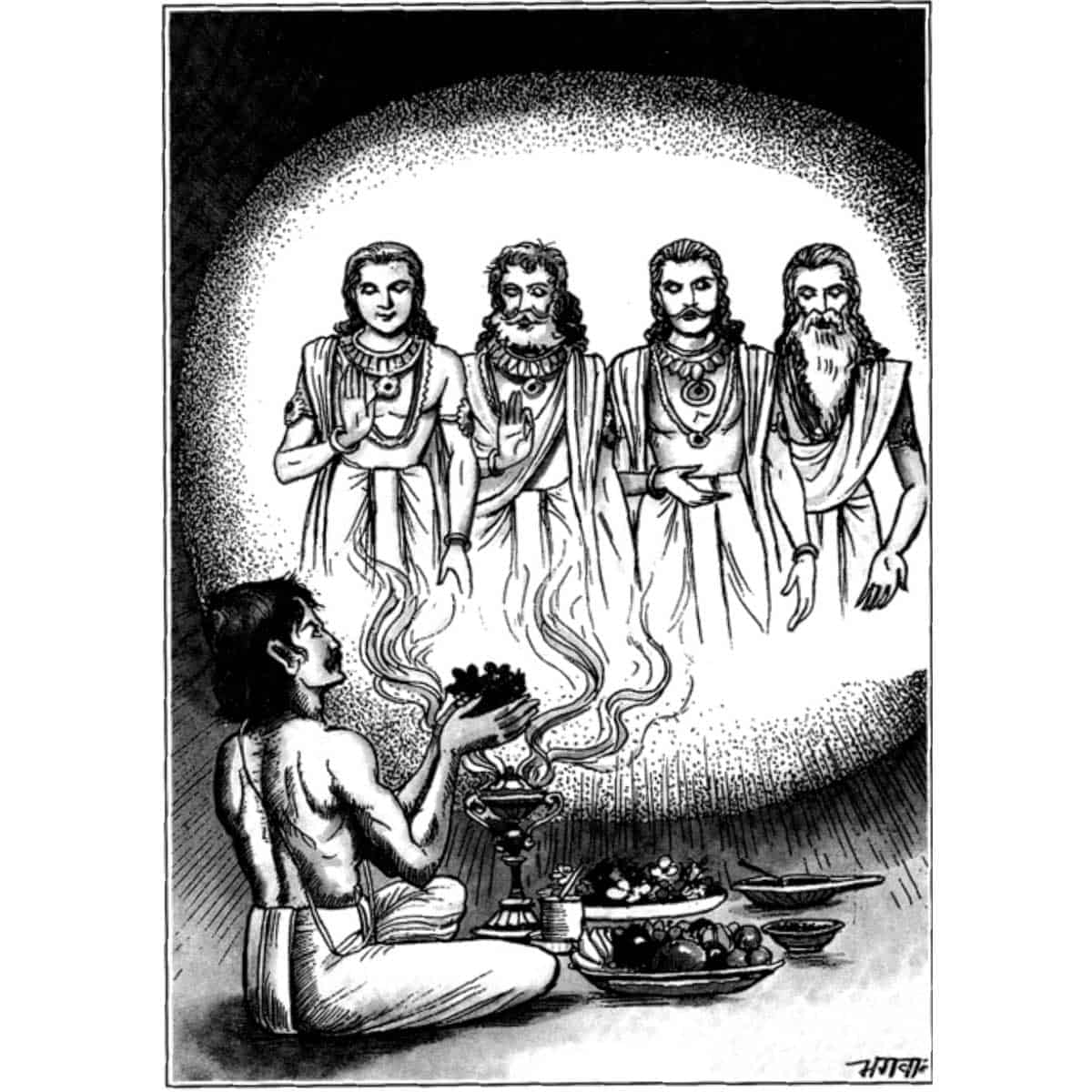
Apparently, the earliest messengers/prophets had appeared in these traditions. It started with the four sages, Agni, Vayu, Aditya and Angira, who transmitted and propagated the unworldly knowledge from the Creator God in the form of the four Vedas.
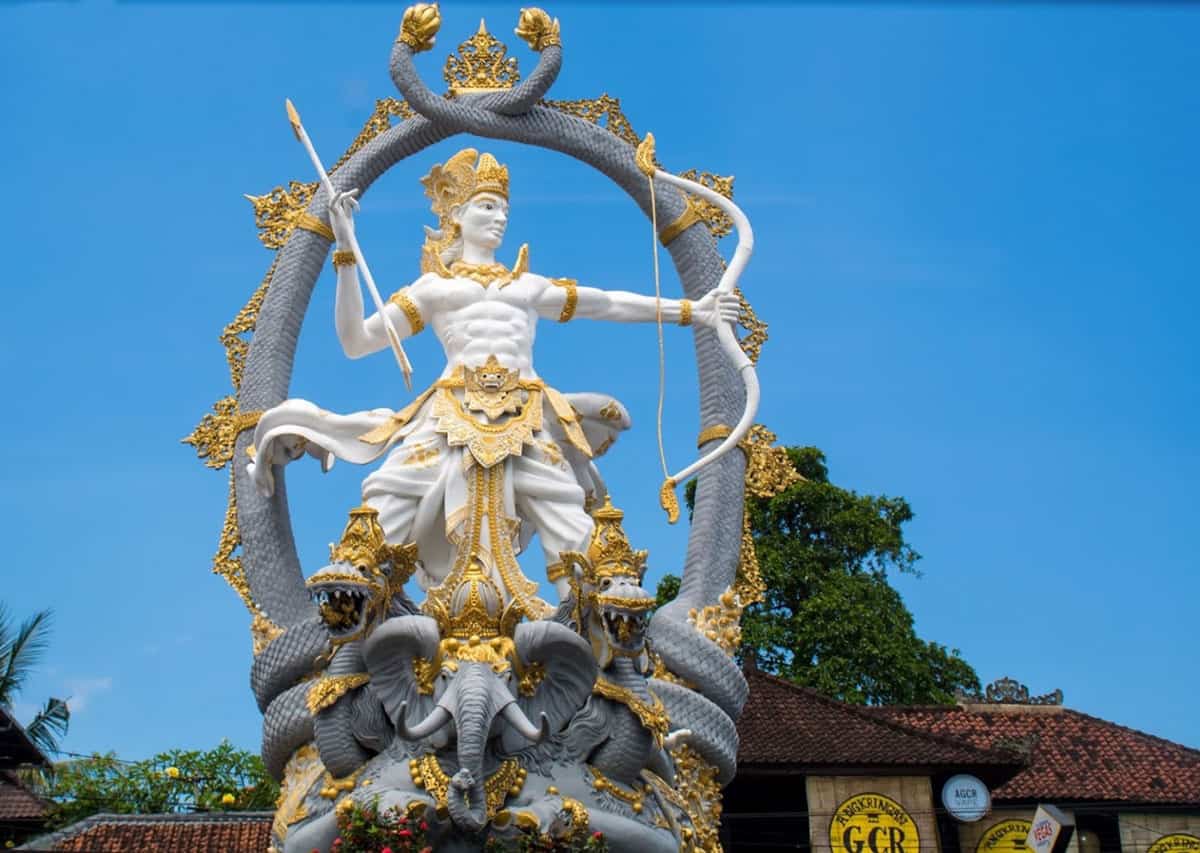
From the earliest time of human origin till about 10000 years back, Vedic culture was the religion, so to say, practiced in the world. The many historical incidents like, Arjun marrying a nāg kanya called ‘Ulopi’ from Pāthāl (America*), the belief of the Mosque at Mecca as an earlier temple of Shiva when King Vikramaditya was the ruler there and, Shakuni of Mahābhārath to be a resident of Gāndħār (Afghanistan), all clearly establish the ancient spread of the culture of Bhārath all over the world.