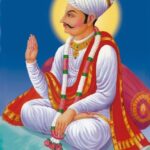
Those who shine brightly in the world—great leaders, saints, thinkers—often receive praise and criticism. This is natural. Light attracts attention, and attention brings opinions. However, someone who is only admired and never criticised might not truly be great—he may be powerful but intolerant. And someone who is neither admired nor criticised usually lives an ordinary life, receiving only private opinions from a small circle.
But the Bhagavad Gita offers a higher teaching: Do your duty without worrying about praise or blame. Whether people love you or oppose you should not disturb your inner balance. What matters is doing what is right, not what is popular.
We Like Praise, But Not Criticism
It’s human nature to enjoy appreciation and avoid discomfort. But life is not always sweet. Just as a flower comes with thorns, people come with both virtues and flaws. When we admire someone, we often ignore their weaknesses. This isn’t wrong—it’s just how love and respect work. But we must also remain aware that no human being is perfect.
Even great saints were not perfect from the beginning. Maharishi Valmiki was once a feared robber called Ratnakar. Angulimal, a violent man, was transformed after meeting the Buddha. These stories remind us of a deep spiritual truth: everyone can change. Transformation is the law of life.
As metal changes shape with heat, human hearts can change with the fire of truth, love, and realisation. But a rigid heart resists, while a flexible heart grows.
Three Types of Human Nature
The Gita explains that human beings act in one of three modes:
- Sattvic: Pure, truthful, light-filled
- Rajasic: Driven by desire, ambition, and show
- Tamasic: Dull, negative, chaotic
Let’s look at admiration through these lenses:
- Sattvic admiration is selfless. It comes from a pure heart and spreads positivity. When we admire without an agenda, just with love and joy, we uplift others and ourselves. This is the highest form of appreciation—it becomes a blessing.
- Rajasic admiration is often flattering. It sounds sweet, but the heart is full of personal motives. It’s like a pot filled with poison but painted with nectar on the outside—beautiful words hiding selfish intentions. This is common in worldly life, where success and gain are worshipped.
- Tamasic people rarely admire anyone. They are stuck in darkness, finding fault in everything. Their world is filled with confusion, inertia, and negativity.
Learning from Both Praise and Criticism
A wise person remains balanced. He does not rise with admiration or fall with criticism. He uses both as tools for inner reflection.
The spiritually awake person welcomes praise with humility and criticism with introspection. He sees both as passing waves on the ocean’s surface while his soul remains calm and deep.
As Chanakya Niti says, “The learned have only virtues,” we understand that this is not literal—it means that through learning and wisdom, we overcome our lower tendencies and strive for a nobler character.
Invisible Lives, Deep Significance
Many live without public fame or recognition. As the poet Oliver Goldsmith wrote, some souls move quietly through life, never complaining, never demanding attention. Yet their lives may be filled with silent strength and divine grace. Not all light shines in the public eye—some glow within, illuminating their inner world.
Spiritual Message
Let us not chase admiration or fear criticism. Let us work with love, stay rooted in truth, and walk our path with humility and courage. Praise and blame are only shadows. The real light is within.
Strive to be sattvic in your admiration—bless others with genuine appreciation. Be open to your own transformation. Remember, the greatest souls were once broken, and the most peaceful hearts once battled storms.
This article discusses how we deal with criticism and admiration. One article refers to the Bhagavad Gita, where Lord Krishn advises us to do our duty without worrying about praise or blame. Another article explains that real wisdom lies in maintaining a balanced view, not getting carried away by admiration and not being disturbed by criticism.
A true yogi, the Gita says, is nishpaksh—he does not take sides. This means he sees clearly without being affected by how others treat him. Whether someone praises or insults him, he remains calm and steady.
In the Gita, the word dharma (duty) means doing the work that life has given us—with sincerity, without selfish desires, and without expecting rewards. Krishn teaches us to offer our actions to the Divine without worrying about what people think. When we act with such selflessness and dedication, we gain inner peace, grow spiritually, and live with true freedom.
In simple terms: Do your best, leave the rest, and let go of the need for approval. This is the path of spiritual strength and harmony.